


A construction estimate is useful only if the owner understands what is included. A low number can hide missing demolition, hauling, protection, trade coordination, permits, inspections, materials, cleanup, or schedule assumptions. Before signing, ask questions that make the scope, risk, exclusions, and decision points visible.
Useful Official Sources
1. Are You Licensed for This Work?
Start with the license. In California, the contractor license should be verified before the estimate becomes a contract conversation. Use the CSLB license lookup and make sure the license number, business name, and classification make sense for the scope.
How to verify
Use CSLB license lookup and confirm the information matches the contractor you are hiring. Ask how licensed specialty trades will be coordinated if the project touches electrical, plumbing, HVAC, roofing, concrete, structural, or commercial work.
Why it matters
License clarity protects the owner and sets the tone for accountability. It also helps separate real contractors from someone who is only comfortable with finish work but is pricing a more complex project.
2. What Exactly Is Included in the Scope?
An estimate should explain the work, not just the price. Demolition, hauling, protection, rough trades, finish labor, fixtures, materials, permits, inspections, cleanup, and exclusions should be clear enough that two bids can be compared side by side. If the project spans more than one trade or room, compare the scope against the Kimmel Elite general contractor services rather than treating it like a single-line repair.
How to verify
Ask for the scope in writing. Walk through the project room by room or area by area. If the property is commercial, include access, business hours, tenant coordination, customer safety, and any operational limitations.
Why it matters
If one contractor includes protection, disposal, trade coordination, and permit assumptions while another leaves them vague, the lower number may not be the better estimate.
3. What Is Excluded?
Exclusions are not automatically bad. They are only a problem when they are hidden. A responsible estimate should state what is not included: engineering, design, permits, fixtures, utility upgrades, patching outside the work area, painting, finish selections, after-hours work, or unknown hidden conditions.
How to verify
Ask the contractor to read the exclusions out loud and explain which ones are likely to become change orders. If an exclusion seems essential to the finished project, ask why it is not included now.
Why it matters
Hidden exclusions are one of the easiest ways for a cheap estimate to become expensive after work begins.
4. What Allowances Are Included?
Allowances are placeholders for selections that are not final yet. They can be useful for cabinets, tile, fixtures, flooring, lighting, or hardware, but only when the dollar amount and scope are clear.
How to verify
- Ask what product category the allowance covers.
- Ask whether labor, delivery, tax, disposal, or install materials are included.
- Ask what happens if the selected item costs more.
- Ask when selections must be finalized.
Why it matters
Vague allowances make it impossible to compare estimates. A low allowance can make the first price look better while pushing the real cost into the future.
5. Who Handles Permits and Inspections?
Permit responsibility should be clear before work starts. Some projects may be simple. Others may involve building, electrical, plumbing, mechanical, energy, accessibility, or fire/life-safety review depending on the address and scope. Owners can use the City of San Diego permits page or the appropriate city/county page to confirm the likely review path before signing.
How to verify
Ask which jurisdiction reviews the address, who submits, who schedules inspections, and how correction notices will be handled. For commercial work, ask whether occupancy, accessibility, or business access could affect timing.
Why it matters
Permits affect schedule, sequencing, closeout, resale, insurance, and legal use of the space. Guessing is not a plan.
6. How Are Change Orders Approved?
Change orders are not automatically a bad sign. They are the right way to document hidden conditions, owner-requested changes, upgraded selections, or scope changes. Problems happen when changes are verbal, vague, late, or priced after the work is already done.
How to verify
Ask for the change-order process in writing. A good change order should explain the reason, added or reduced scope, price, schedule effect, and approval before the work proceeds.
Why it matters
Written approval protects both sides. The owner understands what changed and the contractor avoids doing unpaid or misunderstood work.
7. What Is the Payment Schedule?
Payment terms should match progress, not pressure. The estimate or contract should explain deposit, milestones, draw timing, materials, final payment, and what must be complete before each payment is due.
How to verify
Ask what each payment is tied to: demolition, rough-in, inspection, material delivery, cabinet set, finish stage, punch list, or closeout. Avoid vague payment requests that are not connected to visible progress.
Why it matters
Clear payment terms reduce stress and keep the project from becoming a dispute about what has or has not been completed.
8. What Closeout Documents Will I Receive?
Closeout matters. Owners should understand whether they will receive permit records, inspection signoffs, product information, warranty details, lien releases where appropriate, and photos or notes of hidden rough-in work. The CSLB also provides consumer guidance on preventing mechanics liens, which is worth reading before final payment on larger scopes.
How to verify
Ask what documents are provided before final payment. If subcontractors or suppliers are involved, ask how lien risk is managed and whether releases are part of the closeout process.
Why it matters
Good closeout protects resale, maintenance, warranties, insurance, and future repairs. It also gives the owner confidence that the project was completed cleanly.
9. How Will the Work Affect Daily Use of the Property?
A strong estimate should address more than the finished result. In a home, construction can affect cooking, bathing, sleeping, parking, pets, children, older relatives, and daily access through the house. In a commercial space, construction can affect customer entry, employees, tenants, deliveries, inventory, restroom access, signage, and business hours. Those details belong in the estimate because they influence staging, cleanup, crew timing, and schedule.
For a kitchen, the question may be how long the room is offline and where the temporary refrigerator goes. For a commercial improvement, the question may be whether work can be phased after hours or whether part of the business needs to close. A contractor who can explain the logistics is easier to compare than one who only lists a lump sum.
Ask this before signing
- Which areas will be inaccessible during each phase?
- How will dust, debris, noise, and jobsite cleanup be handled?
- Will work affect parking, deliveries, tenants, employees, customers, kids, pets, or older relatives?
- Who communicates schedule changes and how often?
10. What Would Make This Estimate Change?
A clear contractor will not pretend that every unknown can be solved before walls, floors, roofs, slabs, or exterior finishes are opened. Instead, the estimate should identify the most likely unknowns. Older homes can hide wiring, plumbing, moisture, framing, or prior repair issues. Commercial spaces can hide old tenant improvements, mechanical conflicts, access problems, or code-related issues that are not visible from the finished surface.
The owner should ask which items are fixed, which items are allowances, which items are excluded, and which items are conditional on discovery. That conversation makes change orders less emotional because the process is understood before the work begins. For more detail on hiring and scope comparison, see the related Kimmel guide on choosing a family-owned general contractor in Vista and the permit guide on San Diego County remodel permits.
Good estimates identify
- Known scope included in the price.
- Allowances for owner-selected materials.
- Permit, inspection, design, or engineering assumptions.
- Hidden-condition risks and how they become written change orders.
- Closeout documents expected before final payment.
The Best Estimate Is Clear, Not Just Low
Before signing, the estimate should answer what is included, what is excluded, what could change, who owns permits and inspections, how payments work, and how communication will happen. That is true for a family kitchen, a bathroom remodel, a garage conversion, a deck, concrete work, or a commercial improvement.
A clearer estimate gives the owner a better decision. It shows whether the contractor understands the property, the people using it, the permit path, the trade coordination, and the points where legitimate changes could occur. That is the kind of conversation worth having before a signature, not after demolition starts.
Common Questions
Should I choose the lowest contractor estimate?
Not until you know the scopes match. A lower estimate may simply be missing permits, materials, cleanup, protection, trade coordination, or hidden-condition assumptions.
What is the biggest red flag in a contractor estimate?
A vague scope is the biggest red flag. If you cannot tell what is included, excluded, allowed, or subject to change, you cannot compare the estimate fairly.
Are change orders always bad?
No. Change orders are normal when they document legitimate hidden conditions or owner-requested changes. They become a problem when they are verbal, vague, late, or not approved before work continues.
Have an estimate in hand and want a clearer scope conversation? Ask Kimmel Elite Construction to review the project assumptions before you commit.
Kimmel Elite Construction keeps the conversation practical: what you want to build, what the property needs, what the city may require, and how the work can be coordinated around the home, tenant space, or commercial property.
Request a Free EstimateRelated Guides
Choosing a Contractor
How to Choose a Family-Owned General Contractor in Vista, CA
A practical contractor selection guide for Vista clients who want license clarity, direct communication, clean jobsites, and accountable residential or commercial project coordination.

Permits
Do You Need a Permit for a Remodel in San Diego County?
Learn when remodel work is likely to need permit review, why each city can differ, and how early planning protects budget and schedule.
Kitchen Remodeling
Kitchen Remodel Timeline for an Occupied San Diego Home
Understand the phases that shape a kitchen remodel timeline when the family is still living in the home.
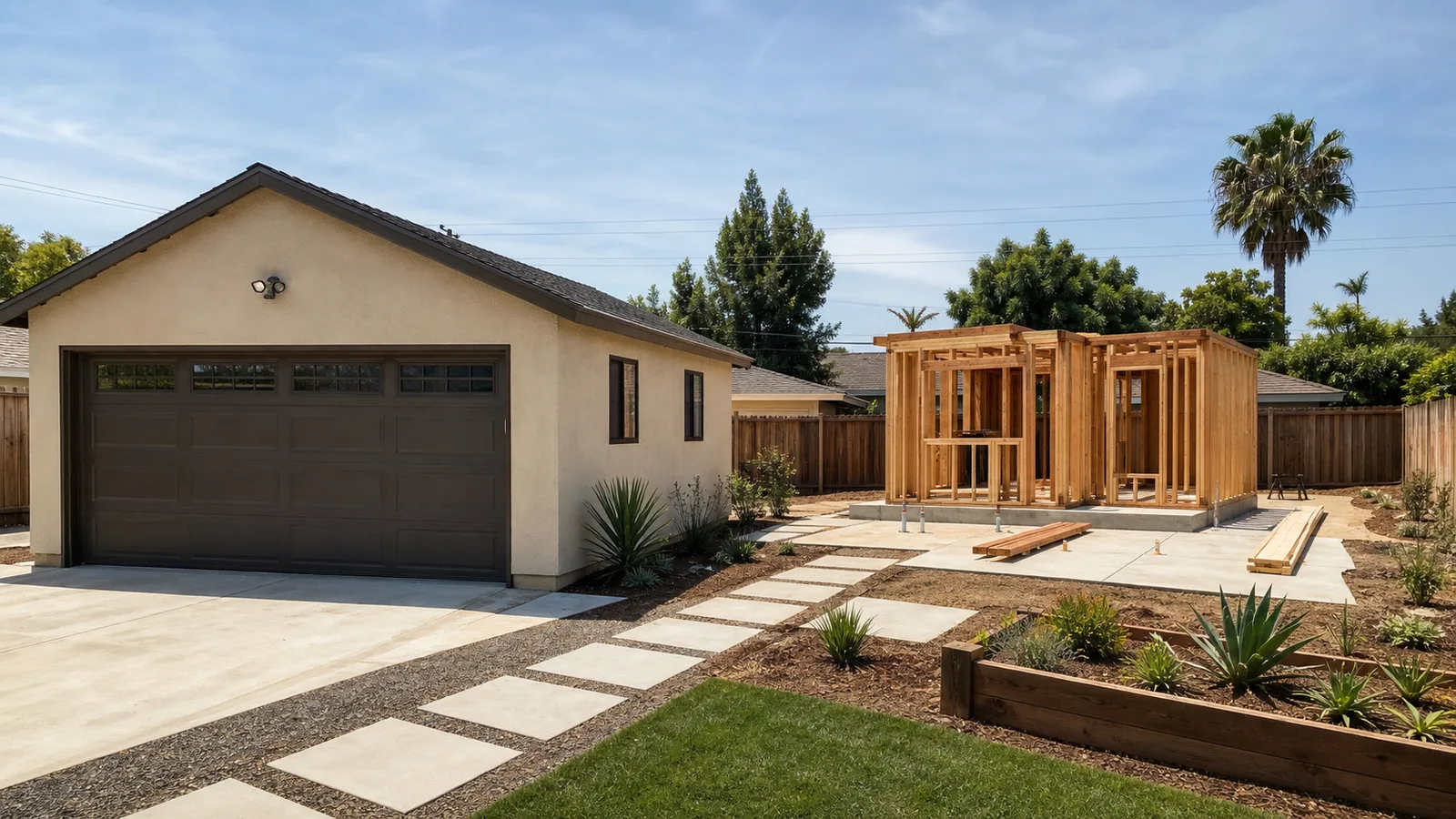
ADUs & Garage Conversions
Garage Conversion vs. Detached ADU in San Diego County
Compare garage conversions and ADUs through the practical lens of family use, utilities, budget, permits, privacy, and long-term flexibility.