


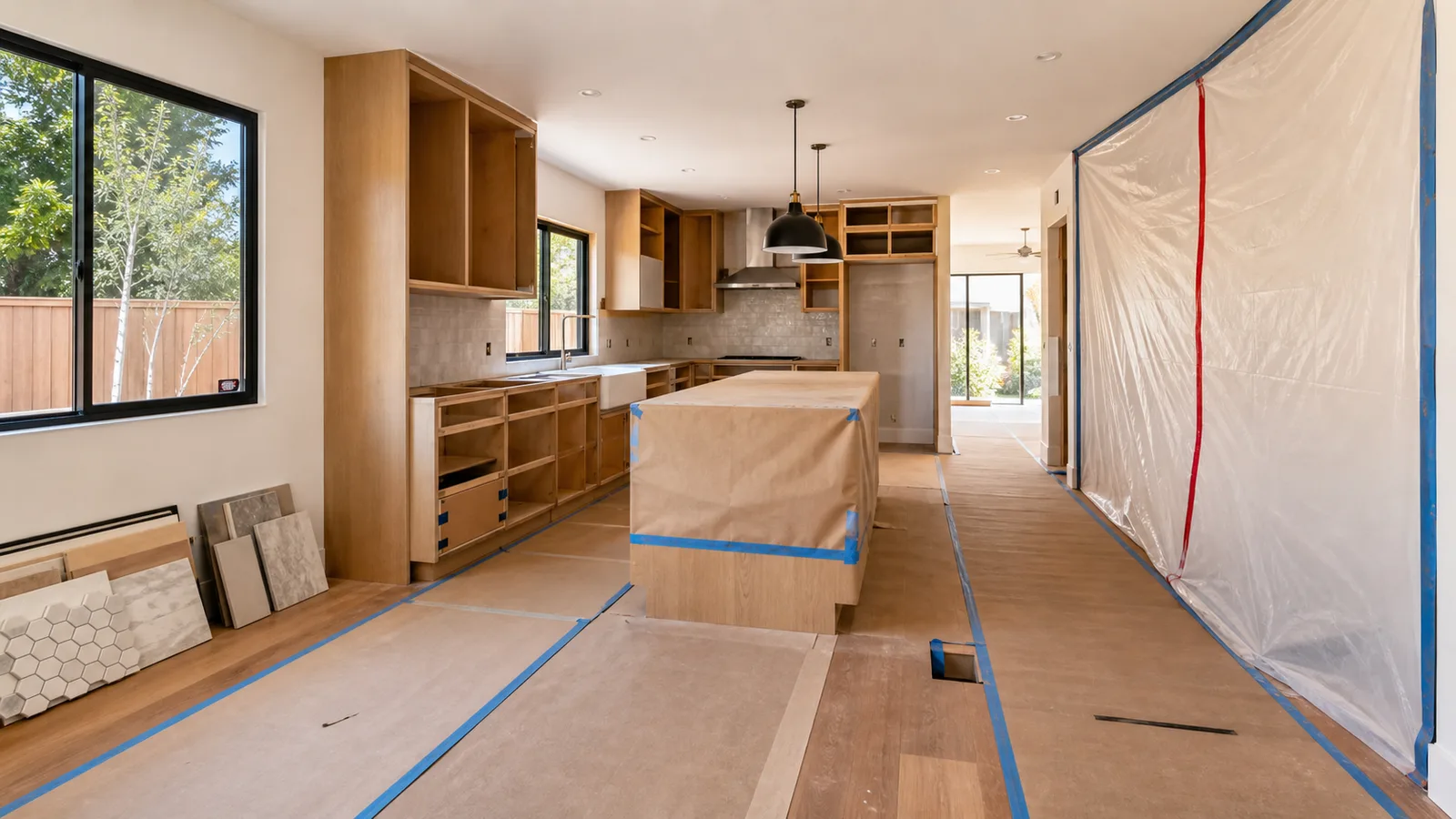
A kitchen remodel affects the room that runs the household. The calendar is not just demolition and installation. It includes decisions, material lead times, permit questions when needed, rough-in coordination, inspections, finish sequencing, and a plan for how the family will eat, move, and live while the kitchen is offline.
Useful Official Sources
Related Kimmel Pages
Phase 1: Planning and Scope
The timeline starts before demo. Layout, appliance locations, cabinet decisions, lighting, plumbing, ventilation, flooring transitions, wall changes, and temporary kitchen needs all affect the schedule. If the project changes structure, electrical capacity, windows, ventilation, or plumbing, permit and inspection planning should be part of the timeline. The Kimmel kitchen remodeling page is the right internal starting point for this scope.
This is where an owner-led GC can help a family separate must-haves from decisions that can wait. The more that is decided before work starts, the fewer disruptions happen after the room is open.
Typical planning window
Simple cosmetic updates may plan quickly. A more involved kitchen with layout changes, custom cabinets, new electrical, plumbing, windows, or structural changes can take weeks or months of planning before construction is ready.
Decisions to make early
- Cabinet layout and appliance locations.
- Sink, range, hood, dishwasher, lighting, and outlet locations.
- Flooring transitions and finish selections.
- Whether walls, windows, doors, plumbing, electrical, or HVAC are changing.
Phase 2: Ordering, Permits, and Preconstruction
Cabinets, windows, doors, specialty tile, counters, appliances, fixtures, and lighting can create delays if they are ordered too late. A good schedule checks lead times before the kitchen is torn apart. For an occupied home, this phase also includes access paths, floor protection, dust containment, trash routes, and temporary kitchen expectations. If the work may require review, owners can compare the scope against the City of San Diego permits page or the city that reviews their address.
The best preconstruction plan answers boring but important questions: where tools go, where debris exits, what hours work happens, how dust is controlled, and when the family needs to make decisions.
How to keep this phase from dragging
- Finalize long-lead selections before demolition.
- Confirm permit assumptions before scheduling crews.
- Identify which family areas need protection.
- Set a weekly communication rhythm before work begins.
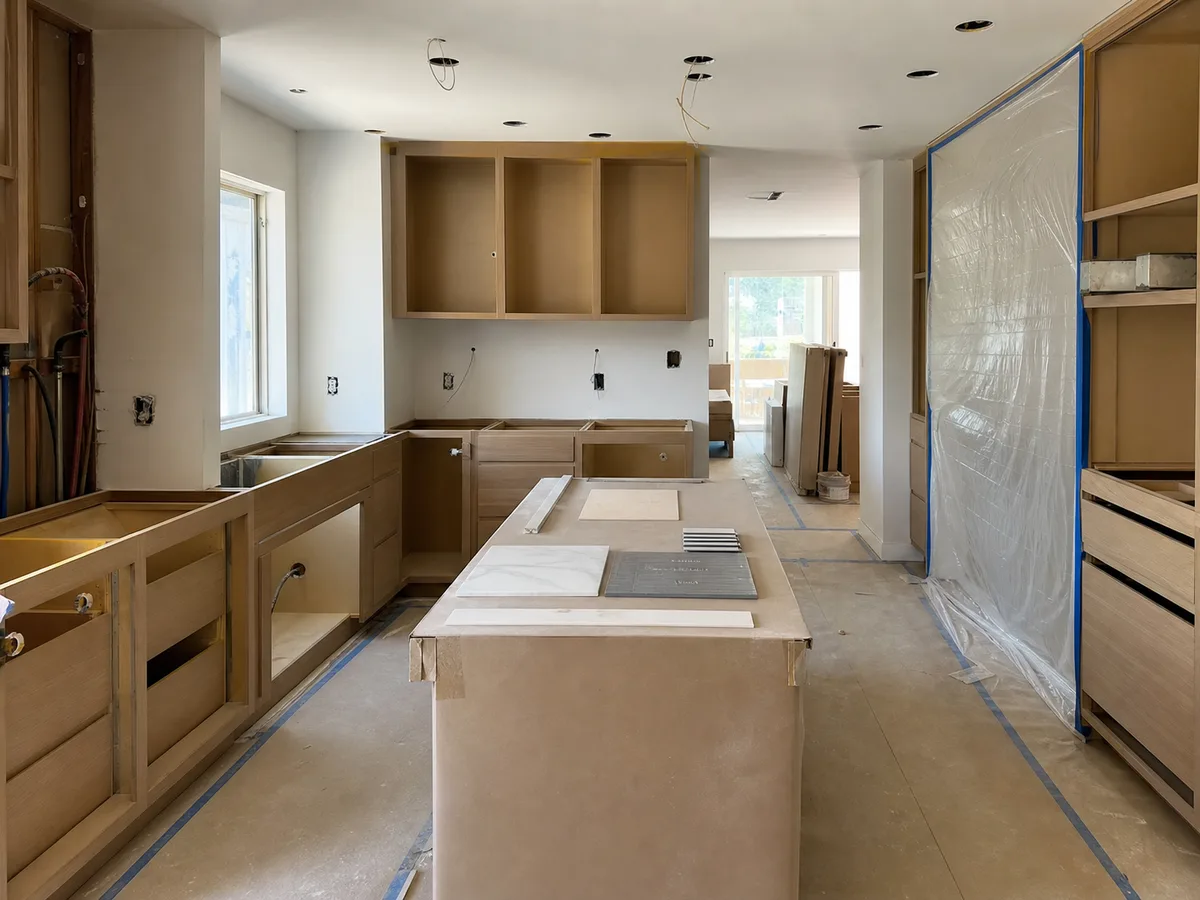
Phase 3: Demolition, Rough-Ins, and Inspections
Demolition often reveals the truth behind the walls. Older homes can expose framing, plumbing, wiring, moisture, venting, or floor-level issues that were not visible at the walkthrough. That does not automatically mean the project was mismanaged. It means the estimate should have explained that hidden conditions are possible.
Electrical, plumbing, HVAC, and framing coordination should happen before drywall and finish surfaces close the work. If inspections are required, they need to be built into the calendar. This is also where electrical and HVAC coordination can prevent conflicts between lighting, ventilation, comfort, appliance loads, and finished surfaces.
What this feels like for the family
This is usually the loudest, dustiest, least convenient part of the remodel. Families should expect limited kitchen access, temporary food prep, noise, work-zone boundaries, and short utility interruptions depending on the scope.
What should be documented
- Hidden conditions discovered after demolition.
- Rough-in locations before walls close.
- Inspection results and correction notices if any.
- Approved change orders before extra work proceeds.
Phase 4: Cabinets, Surfaces, and Finish Details
Once walls are closed, the kitchen starts to look like a kitchen again, but finish sequencing still matters. Cabinets need layout discipline. Counters may require templating after cabinets are set. Tile depends on substrate and layout. Flooring transitions, trim, paint touchups, appliance fit, hardware, lighting, and final adjustments all take time. If the project includes backsplash, flooring, or transition work, review the Kimmel Elite tile and flooring scope before treating the finish stage as a small detail.
Families often feel the most impatient near the end because the space looks close. A good contractor keeps the punch list visible so the last ten percent does not feel endless.
Common finish-stage delays
- Countertop templating and fabrication.
- Backordered appliances or fixtures.
- Tile layout changes after installation has started.
- Paint, trim, hardware, and appliance fit adjustments.
San Diego Schedule Factors That Can Change the Calendar
A kitchen timeline in San Diego County can be shaped by more than cabinet lead time. The reviewing jurisdiction matters. So does whether the work changes windows, lighting, ventilation, electrical capacity, plumbing, structural openings, or the building envelope. The California 2025 Building Energy Efficiency Standards can affect product and documentation decisions when a remodel touches energy-related systems.
That does not mean every kitchen remodel becomes complicated. It means the plan should separate finish-only work from work that changes the systems behind the finishes. A cabinet and counter refresh is a different calendar from a kitchen that removes walls, relocates the sink, adds a range hood, changes windows, updates circuits, replaces flooring, and requires inspections before walls close.
Questions to ask before setting a start date
- Are cabinets, appliances, tile, plumbing fixtures, and lighting selected or still undecided?
- Does the work require permit review, inspection, energy documentation, or specialty trade coordination?
- Will the family stay in the home, and where will temporary food prep happen?
- Will any utility shutoffs, dust barriers, or blocked paths affect daily routines?
How to Live Through the Remodel With Less Friction
Most kitchen remodel stress comes from daily-use friction. The family needs somewhere to prepare basic meals, store food, wash dishes, charge devices, and move through the house safely. A realistic plan may include a temporary refrigerator location, coffee station, microwave table, dust barrier, floor protection, and a clear path that keeps kids, pets, and guests away from the work zone.
The same thinking applies to commercial kitchenette, break-room, or tenant-space work. Employees and customers may still need access to restrooms, entries, delivery routes, and safe walking paths while work is active. If the project affects a business, the estimate should explain whether work can be phased, whether after-hours work is realistic, and what parts of the space must close temporarily. Those questions belong in the first conversation, not after demolition starts.
A practical occupied-home plan covers
- Temporary food prep and refrigerator access.
- Dust control, floor protection, and daily cleanup.
- Safe paths for children, pets, guests, or older relatives.
- Where materials, tools, and debris will be staged.
- Who gives schedule updates and how decisions are approved.
A Realistic Kitchen Timeline Example
A straightforward occupied-home kitchen may spend the first several weeks in planning, pricing, selections, and ordering before construction begins. Once work starts, demolition and rough-ins can move quickly if the layout is settled, materials are ready, and permit/inspection steps are understood. The finish stage can still take meaningful time because cabinets, countertops, tile, paint, trim, fixtures, appliances, and punch-list corrections depend on each other.
A more involved remodel can stretch longer. Removing walls, changing windows, upgrading electrical, relocating plumbing, adding ventilation, replacing flooring across adjacent rooms, or coordinating a larger whole-home remodeling scope changes the timeline. The project may still be worth doing, but the owner should not be sold a schedule that only accounts for demolition and cabinets.
A better timeline conversation includes
- How long selections and material ordering may take before demolition.
- What inspections or city review could affect the middle of the schedule.
- Which finish steps depend on other steps being complete first.
- How the family will function if the kitchen is offline longer than expected.
- What parts of the schedule are fixed and what parts depend on discoveries.
What Can Delay a Kitchen Remodel?
The most controllable delay is late decision-making. Changing layout, tile, hardware, fixture locations, or appliances after work starts can affect material orders and trade sequencing. Other delays are harder to control, including inspections, custom cabinet lead times, hidden damage, and unavailable specialty materials.
For a family-owned GC, the practical job is to surface these risks early and keep communication honest. The goal is not to promise an impossible timeline. The goal is to build a schedule that reflects how the home will actually be used during construction.
If the project is part of a larger remodel, the kitchen schedule should not be reviewed in isolation. Flooring, doors, windows, HVAC, electrical, paint, and adjacent-room work can all affect the order of operations. A short project walkthrough request with photos and a written wish list gives the GC a better chance to identify dependencies before the calendar is set.
- Permit review and inspection timing.
- Cabinet, counter, appliance, and window lead times.
- Hidden wall, floor, plumbing, ventilation, or electrical conditions.
- Family access needs while the kitchen is offline.
- Late finish changes or owner-selected upgrades.
Common Questions
Can a family live at home during a kitchen remodel?
Often yes, but it needs a plan for dust control, temporary food prep, refrigerator access, safe boundaries, noise, cleanup, and realistic expectations about the busiest phases.
What causes kitchen remodel delays?
Common delays include late material selections, cabinet lead times, inspections, hidden conditions, change orders, and decisions that were not made before construction started.
Does every kitchen remodel need a permit?
No. Some finish-only work may be simpler, but moving plumbing, electrical, ventilation, walls, windows, or structural elements can trigger permit or inspection requirements depending on the jurisdiction.
Planning a kitchen remodel while staying in the home? Ask how the work can be phased around daily family life.
Kimmel Elite Construction keeps the conversation practical: what you want to build, what the property needs, what the city may require, and how the work can be coordinated around the home, tenant space, or commercial property.
Request a Free EstimateRelated Guides
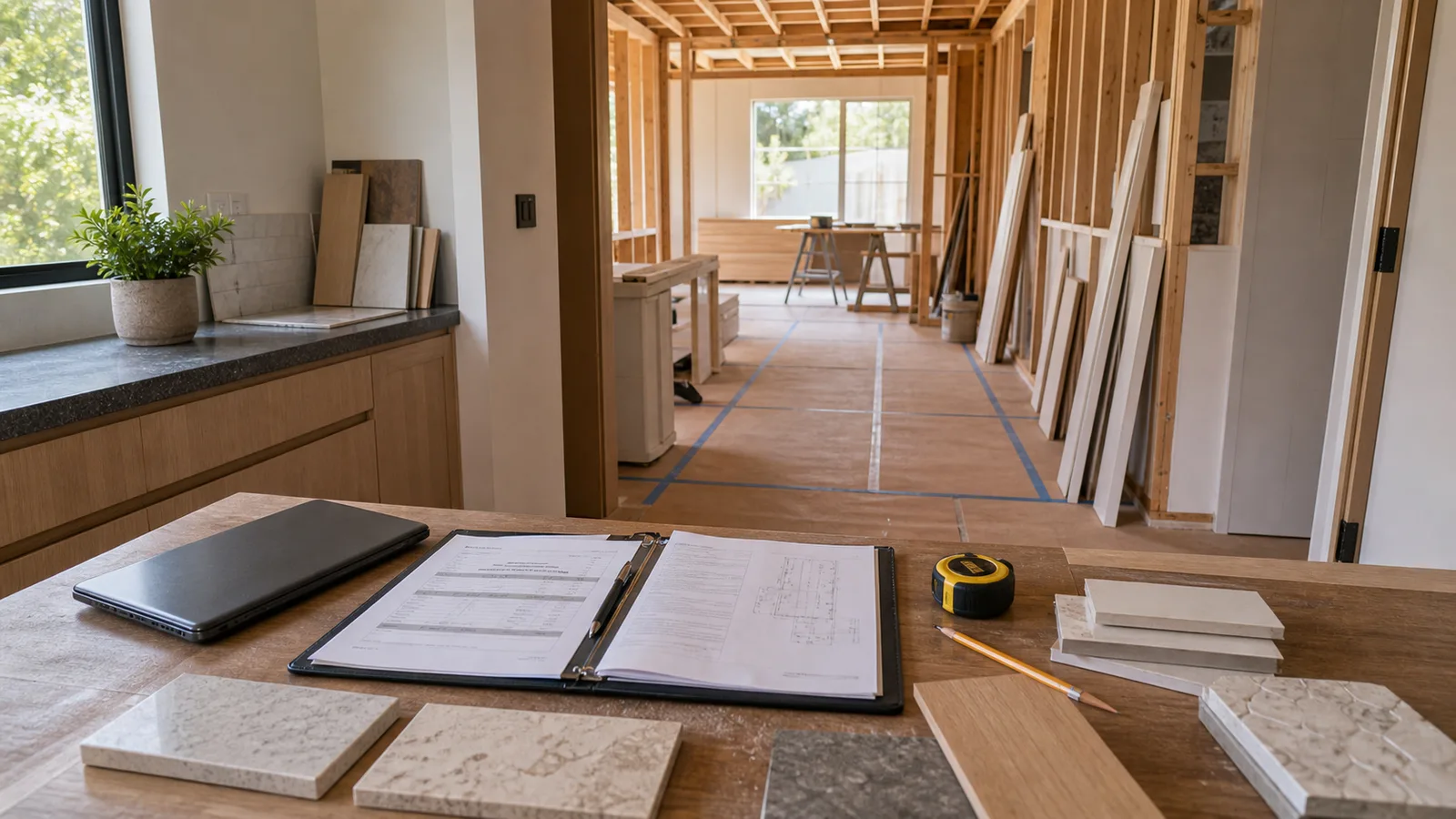
Choosing a Contractor
Questions to Ask Before Signing a Contractor Estimate
A plain-language checklist for comparing contractor estimates by license, scope, exclusions, permits, schedule, change orders, payment terms, and closeout documents.
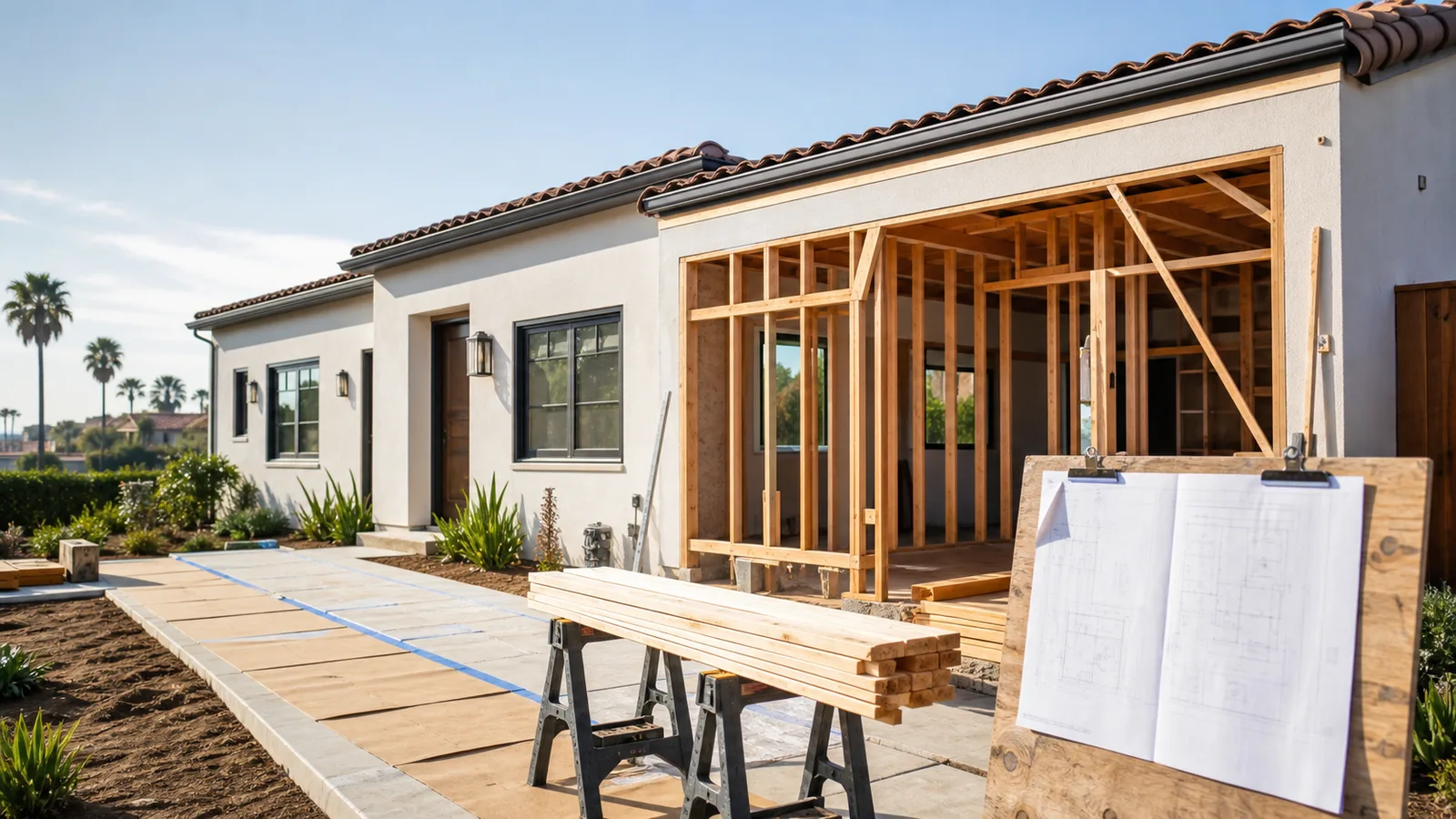
Permits
Do You Need a Permit for a Remodel in San Diego County?
Learn when remodel work is likely to need permit review, why each city can differ, and how early planning protects budget and schedule.
ADUs & Garage Conversions
Garage Conversion vs. Detached ADU in San Diego County
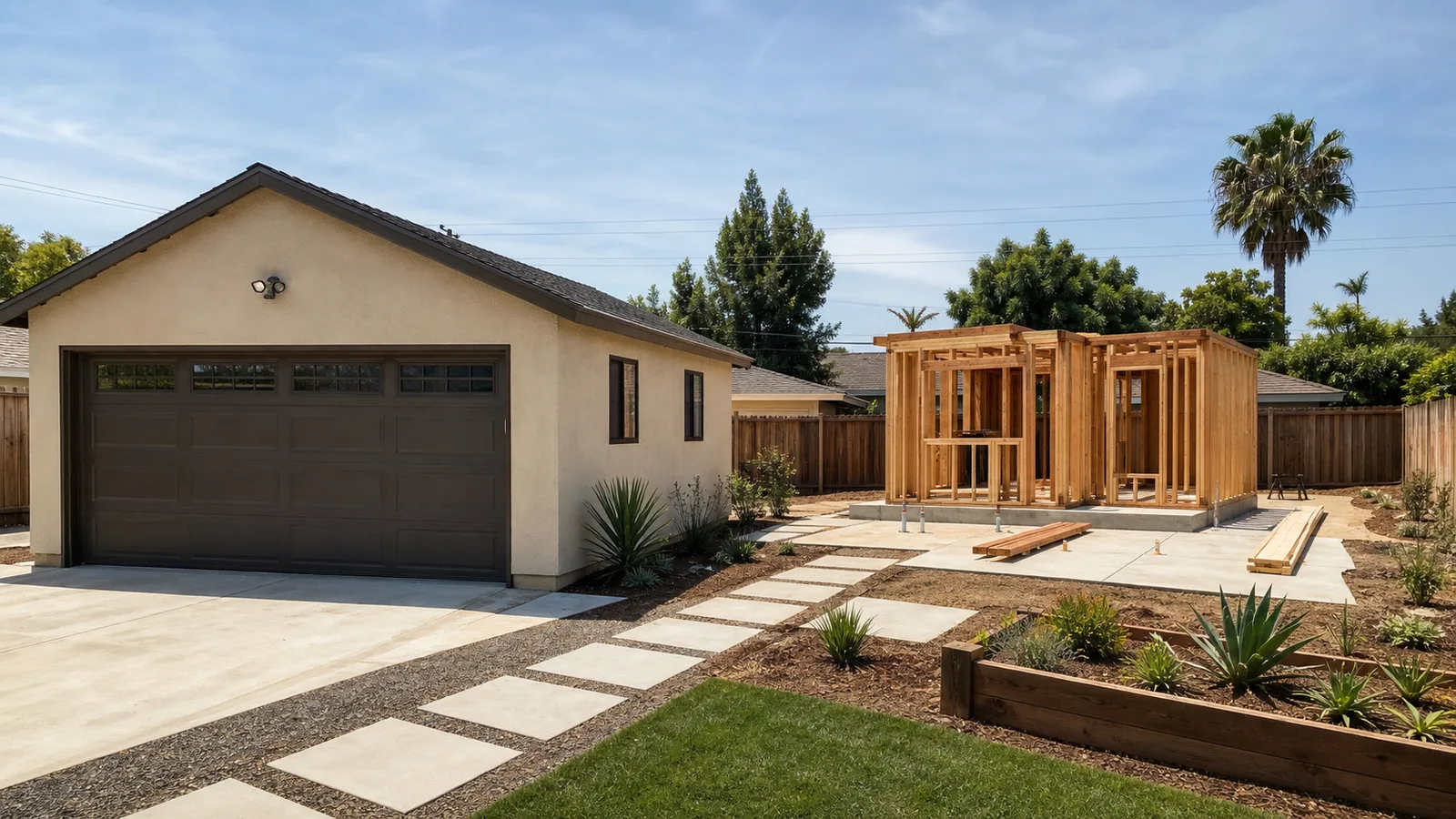
Compare garage conversions and ADUs through the practical lens of family use, utilities, budget, permits, privacy, and long-term flexibility.